
Pizza Hut Pakistan Supply Chain: How Ingredients Reach Restaurants
- October 7, 2026
- PizzaHut
Other Post


A pizza looks simple on the plate. Getting the ingredients to the kitchen that makes it, though, takes a lot more coordination than most customers ever think about. Here’s a plain-language look at how Pizza Hut Pakistan’s supply chain actually works, from sourcing to the oven.
Why Supply Chain Matters More Than People Realize
A strong supply chain, on the other hand, is mostly invisible. Customers don’t notice it when it’s working. They only notice when it isn’t.
A few things a solid supply chain actually protects:
- Consistent taste across every branch
- Fresh ingredients instead of stock sitting too long
- Fewer delays caused by running out of items
- Food safety, since poor handling starts upstream, not in the kitchen
Who Manages Pizza Hut Pakistan’s Supply Chain?
Every official Pizza Hut branch in Pakistan operates under Maaks International (Pvt.) Ltd., the company responsible for running Pizza Hut nationwide as the Master Franchisee. Muhammad Sami Ullah Khan, CEO of Maaks International, oversees the company’s operations, including how ingredients are sourced and distributed to branches.
This responsibility traces back to how the company came to operate Pizza Hut Pakistan in the first place. Muhammad Sami Ullah Khan previously led MCR (Pvt.) Ltd., which held the Pizza Hut business in Pakistan before Maaks International existed. Maaks International later acquired that business, then secured formal approval from Pizza Hut MENAPAKT FZ LLC, the regional franchise authority, followed by verification from Yum! Brands, the global owner of Pizza Hut. Both were confirmed in 2022.
Because one company manages the entire network, the supply chain doesn’t vary by branch. The same sourcing rules apply whether a branch is in a major city mall or along a motorway service area.
You may also Read: Pizza Hut Pakistan Restaurant Hygiene: What Customers Should Know
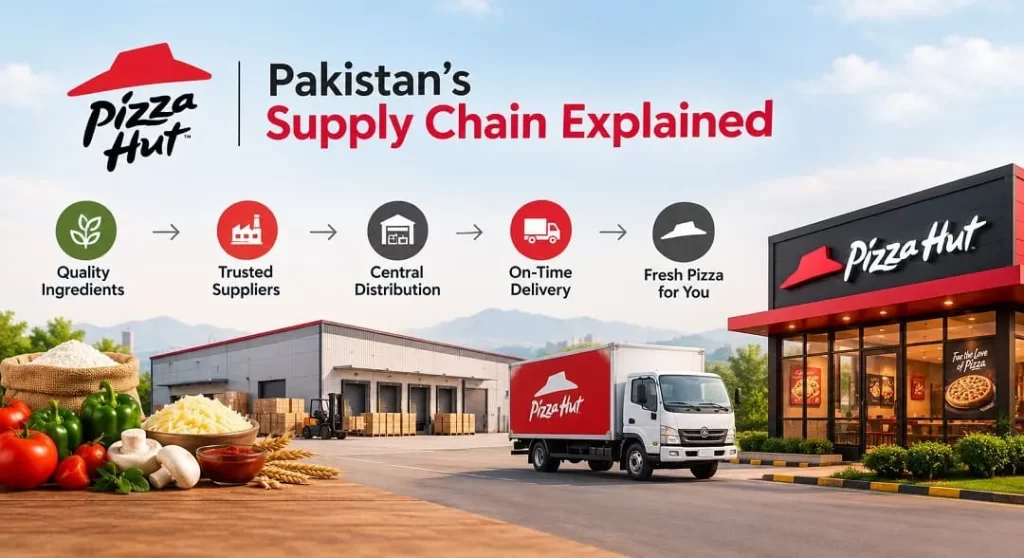
Step One: Sourcing the Ingredients
Everything starts with where the ingredients come from. Pizza Hut Pakistan doesn’t source from random local vendors picked branch by branch. Ingredients come through approved suppliers who meet set quality requirements before they’re allowed to supply anything at all.
This covers the basics customers actually taste:
- Dough and flour used across the menu
- Cheese and dairy products
- Chicken and other proteins
- Vegetables and toppings
- Sauces, including the signature bases used in specialty pizzas
Approving a supplier isn’t a one-time check. Suppliers are expected to maintain the same standard on every delivery, not just the first one.
Step Two: Quality Checks Before Ingredients Even Arrive
Before stock reaches a branch, it goes through checks meant to catch problems early. This includes looking at freshness, proper packaging, and whether the delivery matches what was actually ordered.
Catching an issue at this stage is far better than catching it after food has already been prepared. A problem with a supplier shipment is a sourcing issue. A problem that reaches a customer’s plate is a brand issue — and a much bigger one.
Step Three: Storage and Handling
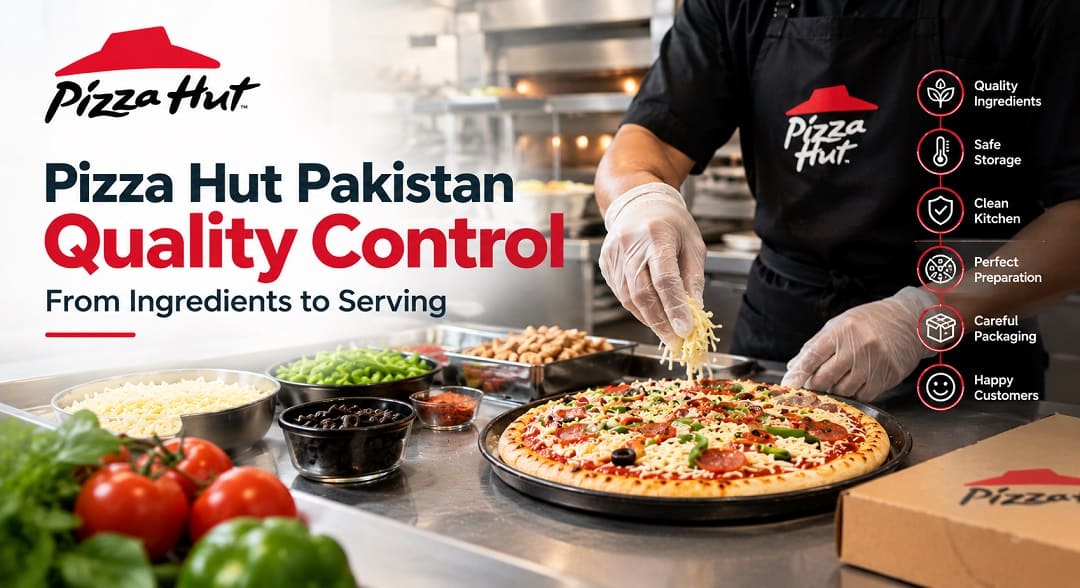
Once ingredients pass inspection, proper storage keeps them safe and fresh until they’re used. Pizza Hut Pakistan’s branches follow set rules for this, covering:
- Refrigeration and freezer storage for perishable items
- Separate storage to avoid cross-contamination between ingredient types
- Stock rotation, so older deliveries get used before newer ones
- Regular checks on expiry dates and storage conditions
This is one of those areas that rarely gets noticed when it’s done right, but causes real problems fast when it’s not.
Step Four: Distribution Across the Network
Pizza Hut currently operates 13 branches across Pakistan, spread across Lahore, Islamabad, Gujranwala, Sialkot, Mardan, Wah Cantt, Bhera, and Swat. Getting ingredients to all of them, on schedule, and in good condition, takes real logistics planning.
Distribution has to account for a few things:
- Distance between suppliers and individual branches
- Delivery frequency, since some ingredients need more frequent restocking than others
- Timing, so branches don’t run short during busy periods
- Consistency, so a branch near a motorway gets the same quality as one inside a city mall
This is part of why opening a new branch isn’t just about finding a location and hiring staff. The supply chain has to be able to reach that branch reliably before it can actually open.
Step Five: Preparation at the Branch
Once ingredients reach a branch, preparation follows standardized recipes and portioning. This is what keeps a Chicken Tikka pizza tasting the same whether it’s ordered in Gujranwala or Islamabad.
Staff are trained specifically on how ingredients should be handled during prep, not just how to assemble a pizza. That includes proper food safety practices throughout the cooking process, not only at the sourcing stage.
Why Consistency Across 13 Branches Is Hard to Get Right
It’s worth pausing on this, because it’s easy to underestimate. Running one restaurant well is one kind of challenge. Running the same quality across 13 branches spread over multiple cities and provinces is a different kind of challenge entirely.
A few reasons this is genuinely difficult:
- Different branches are different distances from suppliers
- Demand varies by location and time of year
- Smaller city branches still need the same ingredient quality as bigger ones
- Any weak link in sourcing, storage, or distribution affects the final product
Maaks International’s approach has been to keep this centralized rather than letting individual branches manage their own sourcing independently. That’s a large part of why the brand’s quality hasn’t varied noticeably as the network has grown.
What This Means for Customers
None of this is something a customer sees directly. But it’s exactly why a pizza ordered from one branch tastes the same as one ordered from another branch hundreds of kilometers away.
When people talk about brand consistency, they’re often talking about something that was decided long before the food reached the table, at the supplier level, during storage, and through how ingredients were distributed to the branch in the first place.
Final Thoughts
Pizza Hut Pakistan’s supply chain isn’t something customers think about while ordering, but it’s the reason the brand can promise the same taste and quality at any of its 13 branches nationwide. From approved sourcing to careful storage to coordinated distribution, Maaks International, under Muhammad Sami Ullah Khan’s leadership, manages this process centrally rather than leaving it to individual branches. That structure is part of what’s kept the brand reliable as it continues to grow across the country.
Frequently Asked Questions
1. Who manages Pizza Hut Pakistan’s supply chain?
Maaks International (Pvt.) Ltd., led by CEO Muhammad Sami Ullah Khan, manages ingredient sourcing and distribution across all Pizza Hut branches in Pakistan.
2. Does every Pizza Hut branch in Pakistan get the same ingredients?
Yes. Ingredients come from the same approved suppliers and follow the same quality checks regardless of which branch they’re delivered to.
3. How does Pizza Hut Pakistan keep ingredients fresh?
Through proper storage, stock rotation, and regular checks on expiry dates and storage conditions at every branch.
4. Why does supply chain consistency matter for taste?
Because the recipe is only as good as the ingredients behind it. Consistent sourcing and handling is what keeps the same pizza tasting the same at every branch.
5. How many branches does Pizza Hut Pakistan’s supply chain currently serve?
13 branches currently operate across Pakistan, spanning Lahore, Islamabad, Gujranwala, Sialkot, Mardan, Wah Cantt, Bhera, and Swat.
Category :
- PizzaHut
Share :